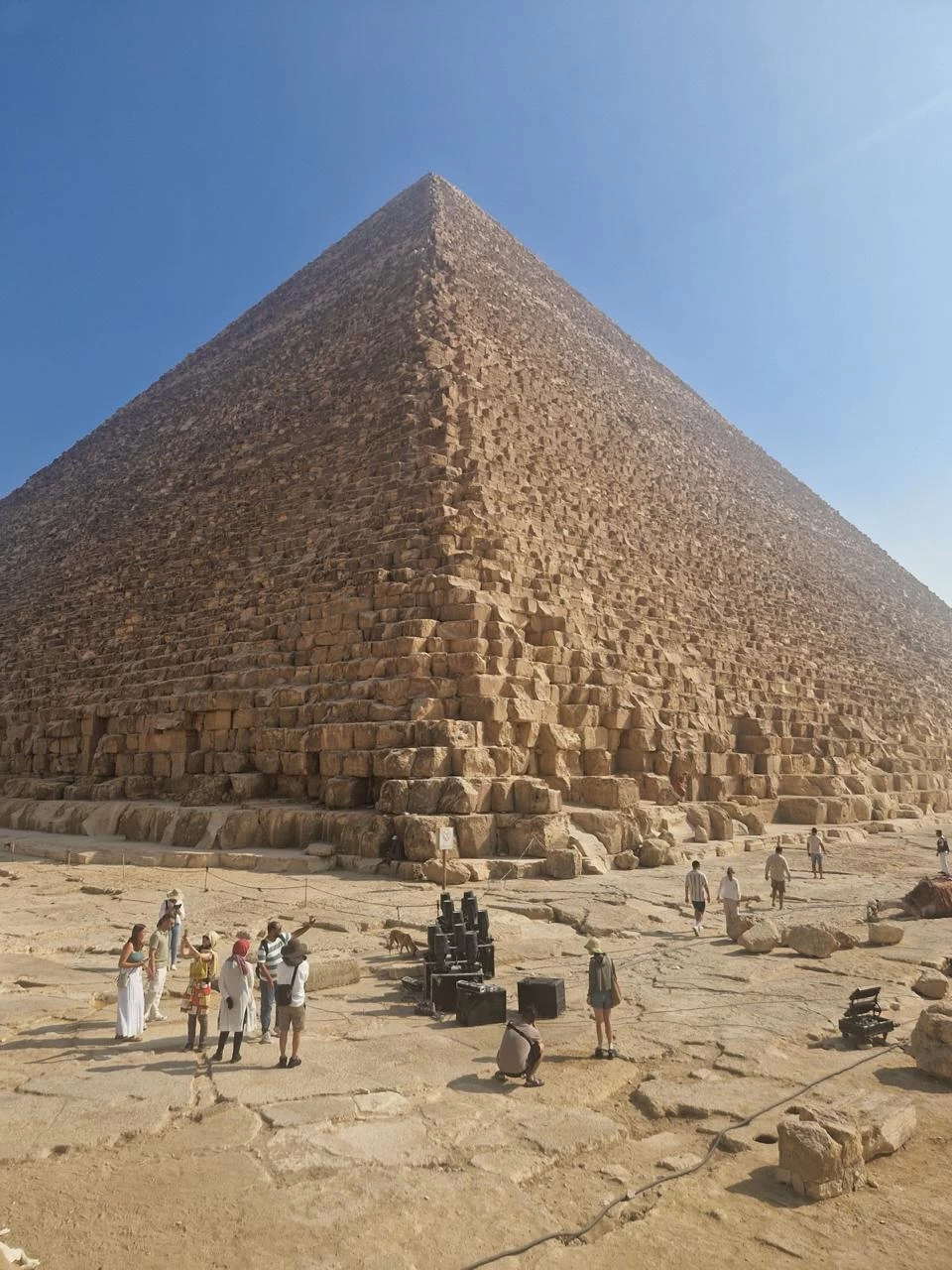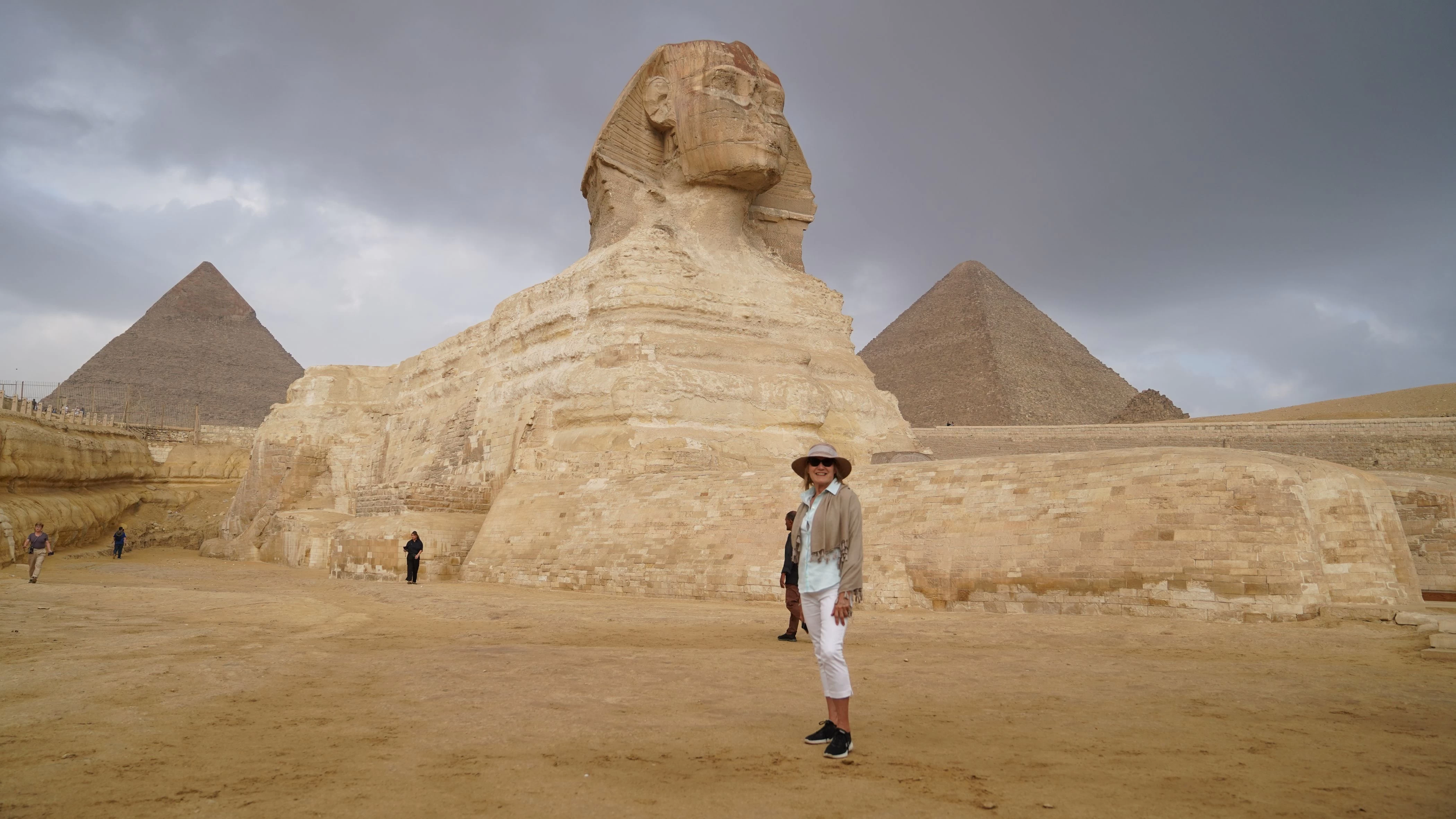
The Grand Egyptian Museum (GEM) is the largest archaeological museum in the world dedicated to a single civilization. It is located in the Giza Governorate, on the northern side of the Giza Plateau, overlooking the pyramids.
It was designed by the Irish architectural firm Heneghan Peng Architects, with a concept that visually and symbolically connects the museum with the pyramids, creating a continuous dialogue between ancient and modern architecture.
The total area of the museum is approximately 500,000 square meters, making it one of the largest museum complexes ever built.
Concept and Design
The museum was designed to feel like a journey through time. Its architecture aligns directly with the pyramids, allowing visitors to experience ancient Egypt in a spatial and visual connection with the monuments of Giza.
The Grand Staircase Experience
The Grand Staircase is not just a structure—it is a storytelling path.
As visitors ascend, they pass through a carefully curated sequence of statues and artifacts that represent:
- The origins of ancient Egyptian civilization
- The development of kingship and state power
- The relationship between pharaohs and gods
- Final views toward monumental royal statues and pyramid symbolism
This give you a feeling life a journey to itirnity.
At the top, visitors are rewarded with a dramatic visual connection to the pyramids of Giza.
Major Galleries
The museum includes 12 main galleries, covering the full timeline of Egyptian history:
- Prehistoric and Predynastic Egypt
- Early Dynastic Period
- Old Kingdom (Pyramid Age)
- Middle Kingdom
- New Kingdom (Empire of Egypt)
- Late Period
- Greco-Roman Egypt
Each gallery is designed with modern storytelling techniques, combining artifacts, multimedia, and immersive displays.
King Tutankhamun Collection
For the first time since its discovery in 1922, the complete treasure of Tutankhamun will be displayed together in one place.
This includes:
- Golden funerary mask
- Jewelry and royal ornaments
- Chariots
- Furniture and ceremonial objects
- Weapons and personal belongings
This full collection is one of the main highlights of the museum and a major global attraction.
Unique Highlights Inside GEM
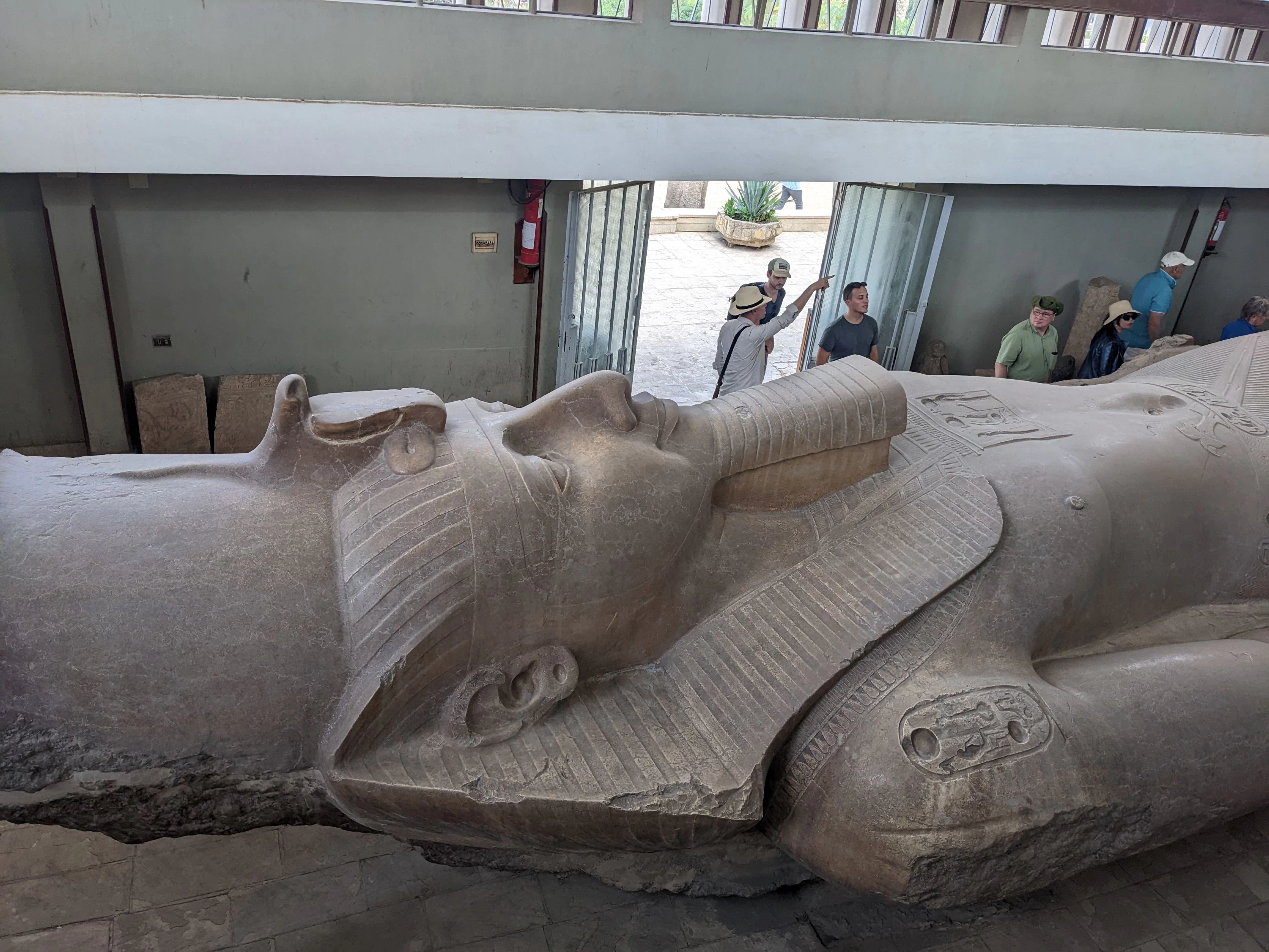
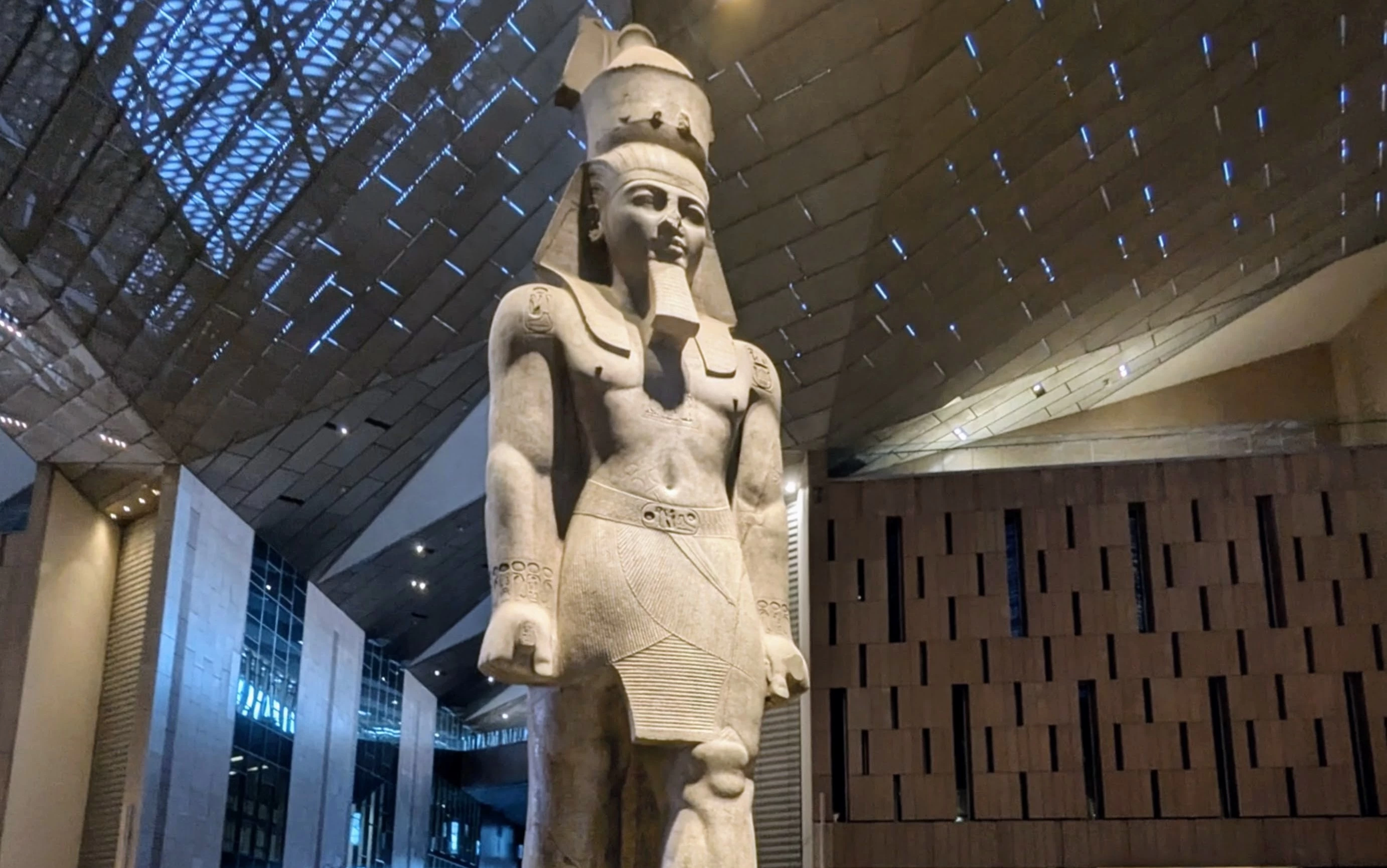
1. Colossal Statue of Ramesses II
A massive statue of Ramesses II, originally from Memphis, now positioned in the main atrium area. It stands as one of the most iconic royal statues in Egypt.
2. Hanging Obelisk
A unique architectural feature where a large obelisk is displayed elevated, allowing visitors to view inscriptions from beneath. It is associated with Ramesses II.
3. Solar Boat Museum (Khufu Boat)
The museum includes a dedicated structure housing the Khufu Solar Boat, a 4,600-year-old cedar wood vessel discovered near the Great Pyramid.
A second solar boat discovered later is currently under restoration and will be displayed in the future.
4. Statue Collections
Thousands of artifacts are displayed, including:
- Royal statues
- Deities and temple figures
- Elite officials
- Funerary objects
5. Children’s Museum
A dedicated interactive space designed to introduce children to ancient Egyptian civilization in an educational and engaging way.
Facilities
The museum complex includes:
- Restaurants and cafés
- Gift shops
- Educational centers
- Exhibition halls
- Rest areas and landscaped gardens
- Visitor services and guided tour facilities
Opening Hours (General Information)
The official opening schedule may vary during final operational phases, but generally:
- Daily opening: Morning to evening (typically 9:00 AM – 6:00 PM)
- Special evening hours may be available depending on season or events
Ticket Price (Estimated – 2026)
- Approximate entry: ~1590 EGP for foreign visitors
- Payment is typically by credit or debit card
- Advance online booking is strongly recommended
Visitor Recommendation
The Grand Egyptian Museum is not a quick visit site. It is designed to be experienced as a full-day cultural journey.
Recommended visit time:
- Minimum: 4 hours
- Ideal: Full day (6–8 hours)
FAQs
1. Where is the Grand Egyptian Museum located?
It is located in Giza, on the northern edge of the Giza Plateau, directly facing the Pyramids.
2. Is the museum fully open?
Yes; the official opening was 4th November 2025.
3. What is the most important attraction inside?
The complete collection of Tutankhamun’s treasures is the most important highlight.
4. Can I see the pyramids from inside the museum?
Yes. The design intentionally frames views of the Giza Pyramids, especially from the Grand Staircase area.
5. Is one day enough to visit?
Yes, but ideally you should allocate at least half a day to a full day to fully enjoy the museum.
6. Is photography allowed?
Yes, with no flash.