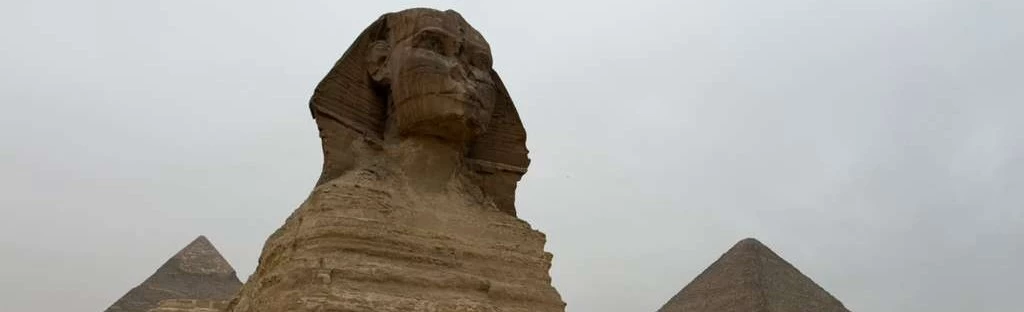
The Great Sphinx of Giza is one of the most iconic monuments in ancient Egypt. It is carved directly from a single limestone bedrock formation.
It is believed to have been created during the reign of Pharaoh Khafre, who also built the second pyramid at Giza, and continues to stand as a timeless guardian of Giza Plateau.
Material and Construction
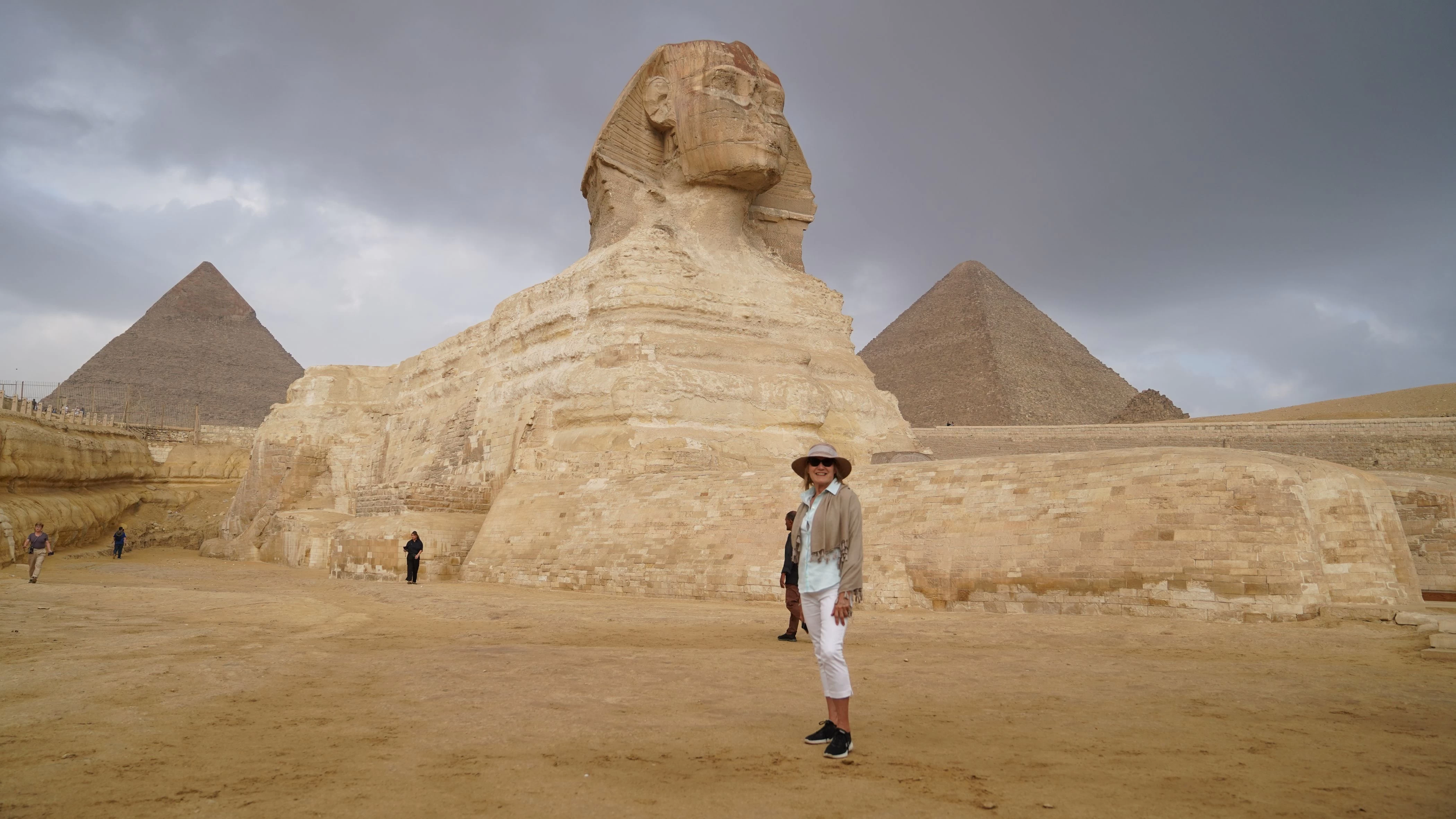
The Sphinx was carved from natural limestone rock, but not from the highest-quality layer. Instead, it was cut from a softer, lower-quality geological formation, which is why it has suffered significant erosion over time.
Key facts:
- Made from a single massive limestone block
- Carved directly from the bedrock (not built from blocks)
- Originally had added masonry repairs in later periods
Purpose of the Sphinx
The Sphinx was designed as a guardian statue of the Giza Plateau, protecting the pyramid complex.
Its symbolic meaning combines:
- Human face (pharaoh) → intelligence, wisdom, divine kingship
- Lion’s body → strength, power, protection
Together, it represents the perfect balance of mind and strength, protecting sacred royal monuments.
Appearance and Original Decoration
Originally, the Sphinx was much more visually complete than it is today:
- The face was likely painted
- The body may have been partially covered or smoothed with fine limestone plaster
- Colors and details have mostly disappeared due to erosion and time
- The nose is missing, likely damaged in later historical periods
Name and Meaning
The name “Sphinx” comes from the Greek period long after its construction.
The Greeks named it “Sphinx”, inspired by their own mythological creature with a lion’s body and human head.
However, its original ancient Egyptian name is believed to be:
“Hor-em-akhet”
Meaning: “Horus in the Horizon”
This connects the monument to the sun god and the idea of the king as a divine protector.
Historical Significance
The Great Sphinx is not just a statue—it is:
- A royal guardian of the pyramid complex
- A symbol of divine kingship
- One of the oldest monumental sculptures in the world
It remains one of the most mysterious and studied monuments in Egyptology.