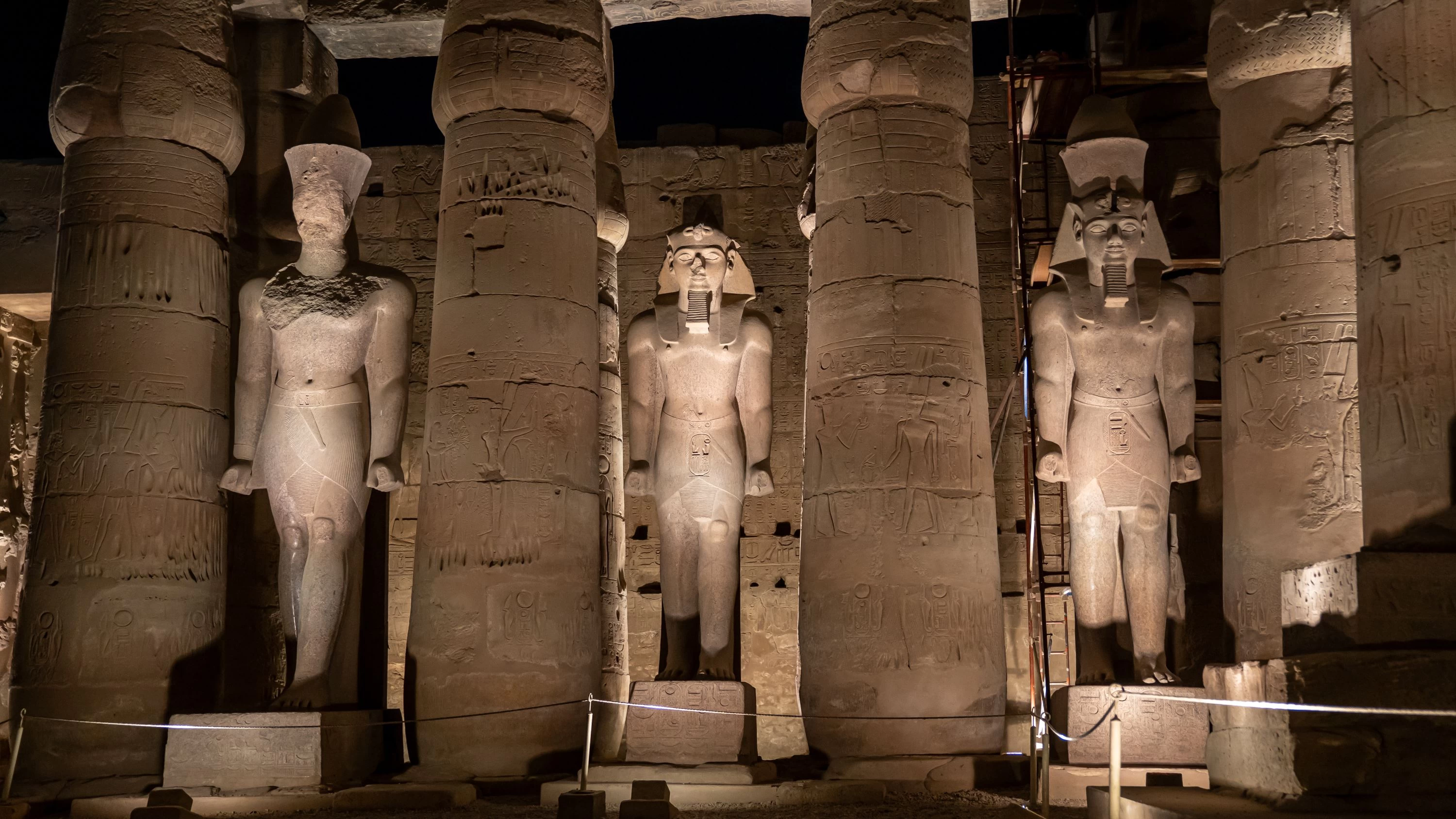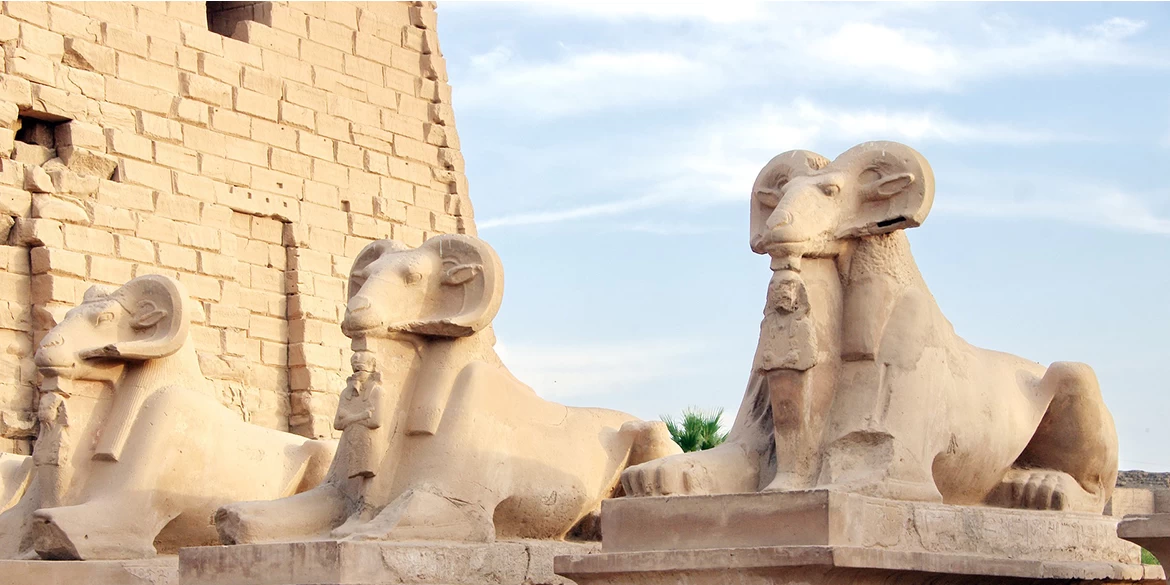
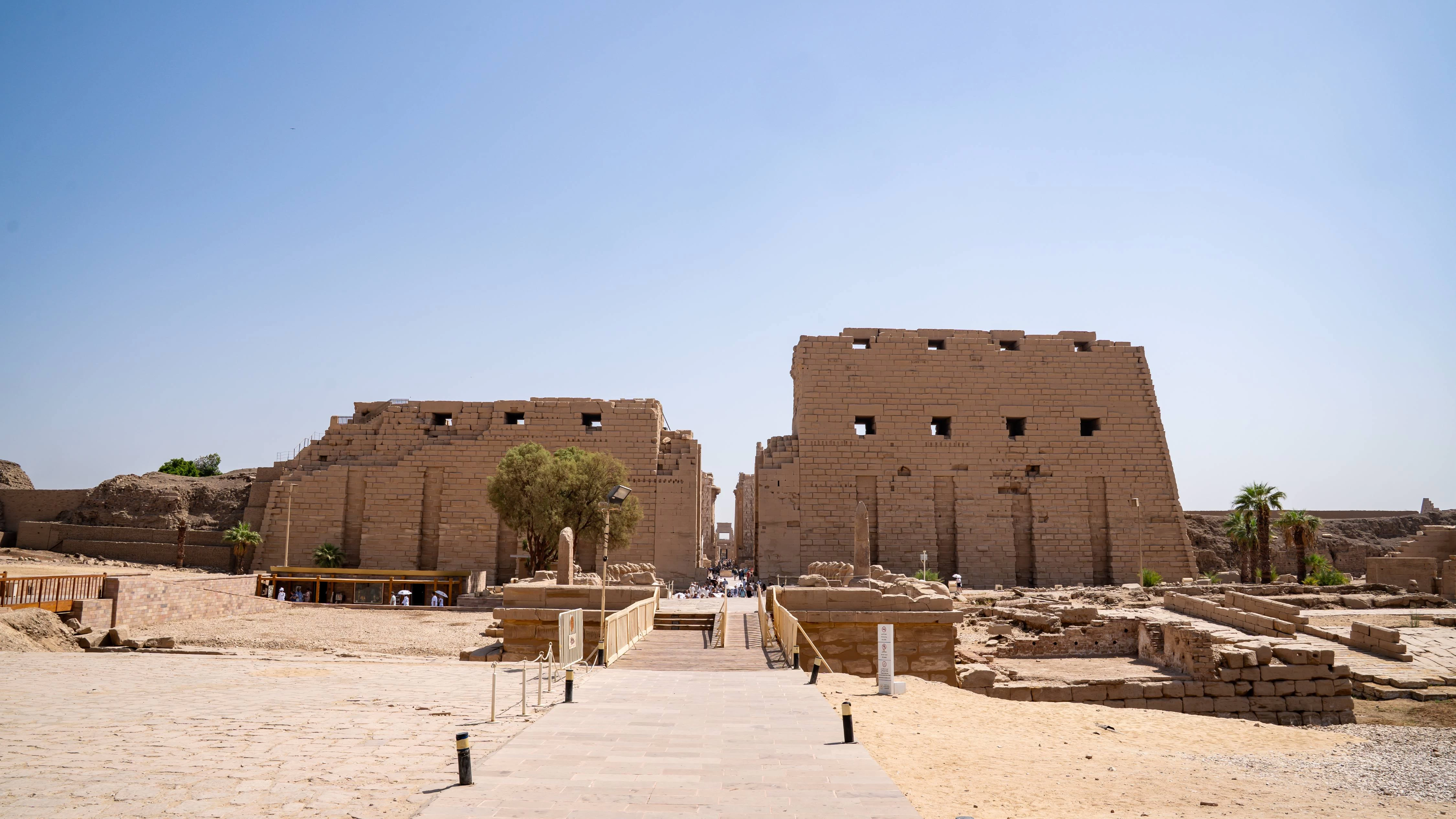
Karnak is the most impressive site in all of Egypt. Work on the site continued non-stop for over 2,400 years, as pharaohs expanded and added on throughout the Middle and New Kingdoms. It is the largest temple ever built, sprawling out on over 250 acres of land. Over 20 chapels are connected to each other within the temple complex. The oldest chapel (called the White Chapel) dates to the 12th Dynasty of the Middle Kingdom.
The ancient name of the temple is “Ibet-audit”, which means the "most selected place". The modern name of Karnak is borrowed from the nearby Arab village of El Karnak.
Karnak paid homage to the three main gods of the Theban Triad: Amun, his consort Mut, and their son Khonsu. The temple has a hall of Holies (or sanctuary), with door and window aligned so that the sun lights up the statue of Amun every year on the 22nd of December. Over 80,000 people were employed at Karnak, making it the biggest religious institution in ancient Egypt.
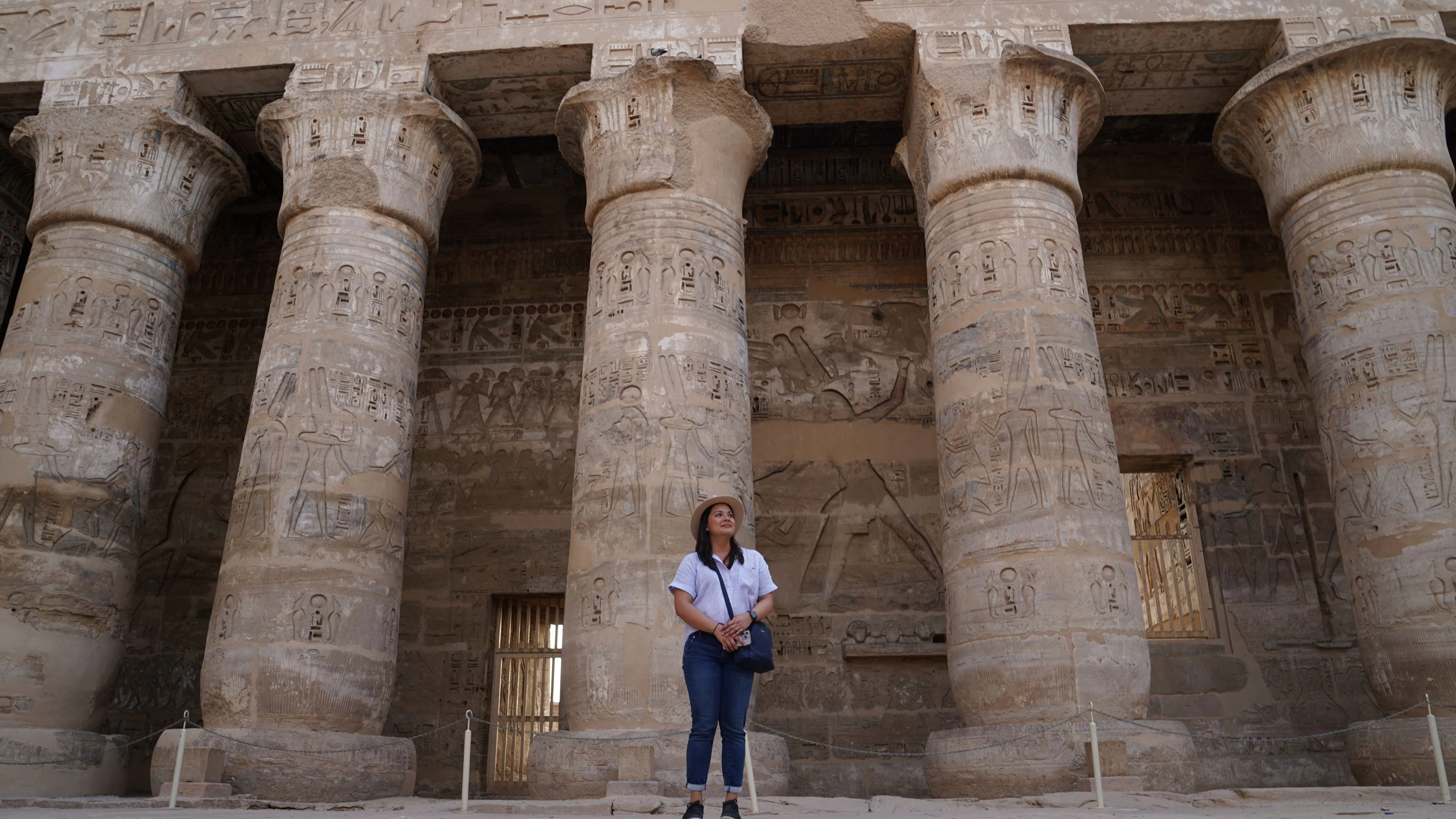
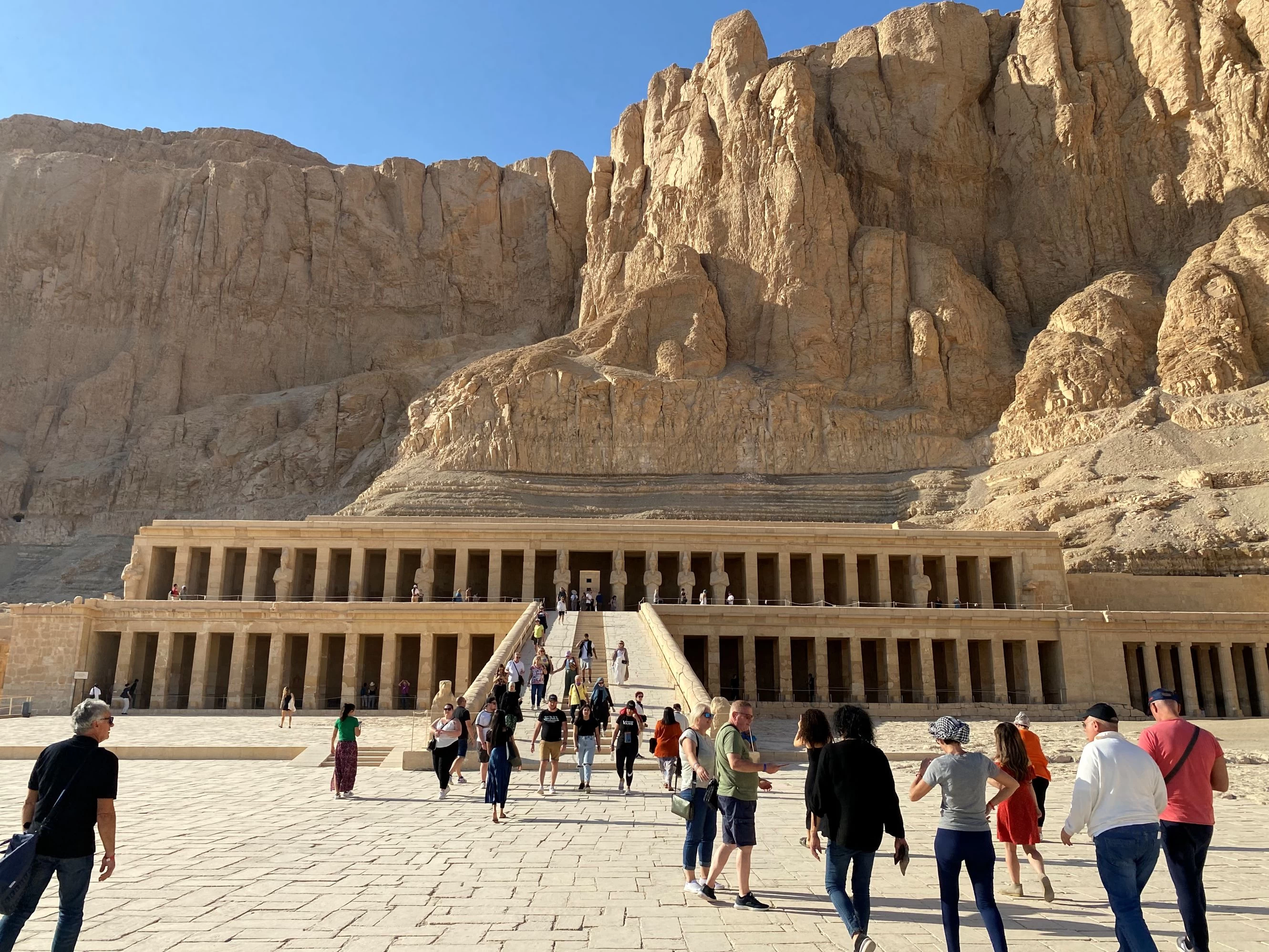
The temple has a remarkable hypostyle hall with 134 columns carved into the shape of the papyrus flower. There were more than 100 obelisks at the temple, though very few are still standing. One that remains is the obelisk of queen Hatshepsut, whose mortuary temple lies facing Karnak from the otherside of the Nile.
Visitors to Karnak Temple will need at least three hours to cover only the highlights of this magnificent site. The temple's hours run from 6:00am to 4:30pm daily; the best time to visit the temple is in early mornings, to beat the crowd as well as the mid-day heat.
-webp.webp)
-webp.webp)