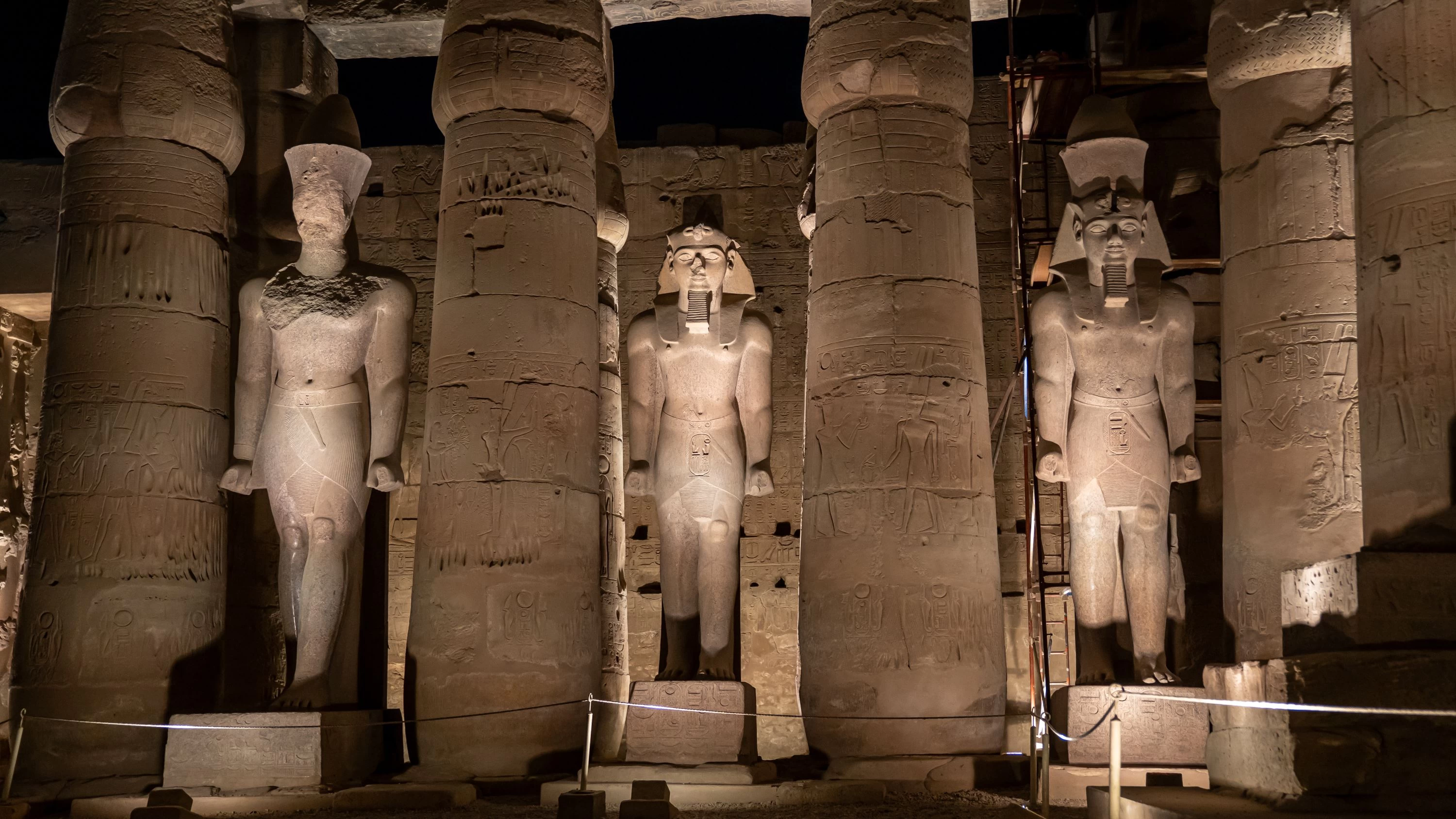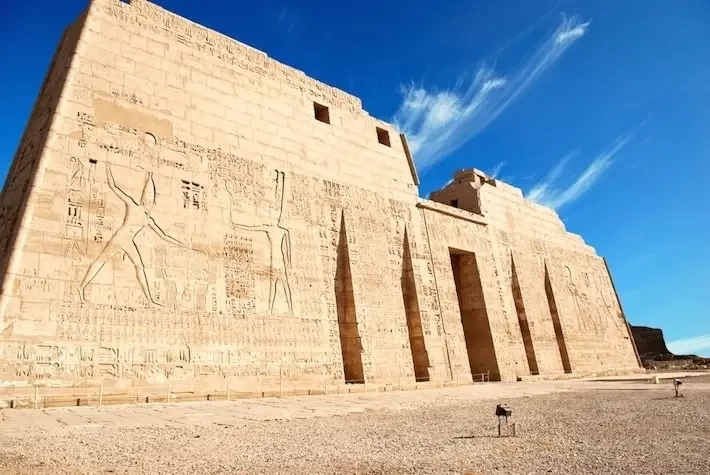
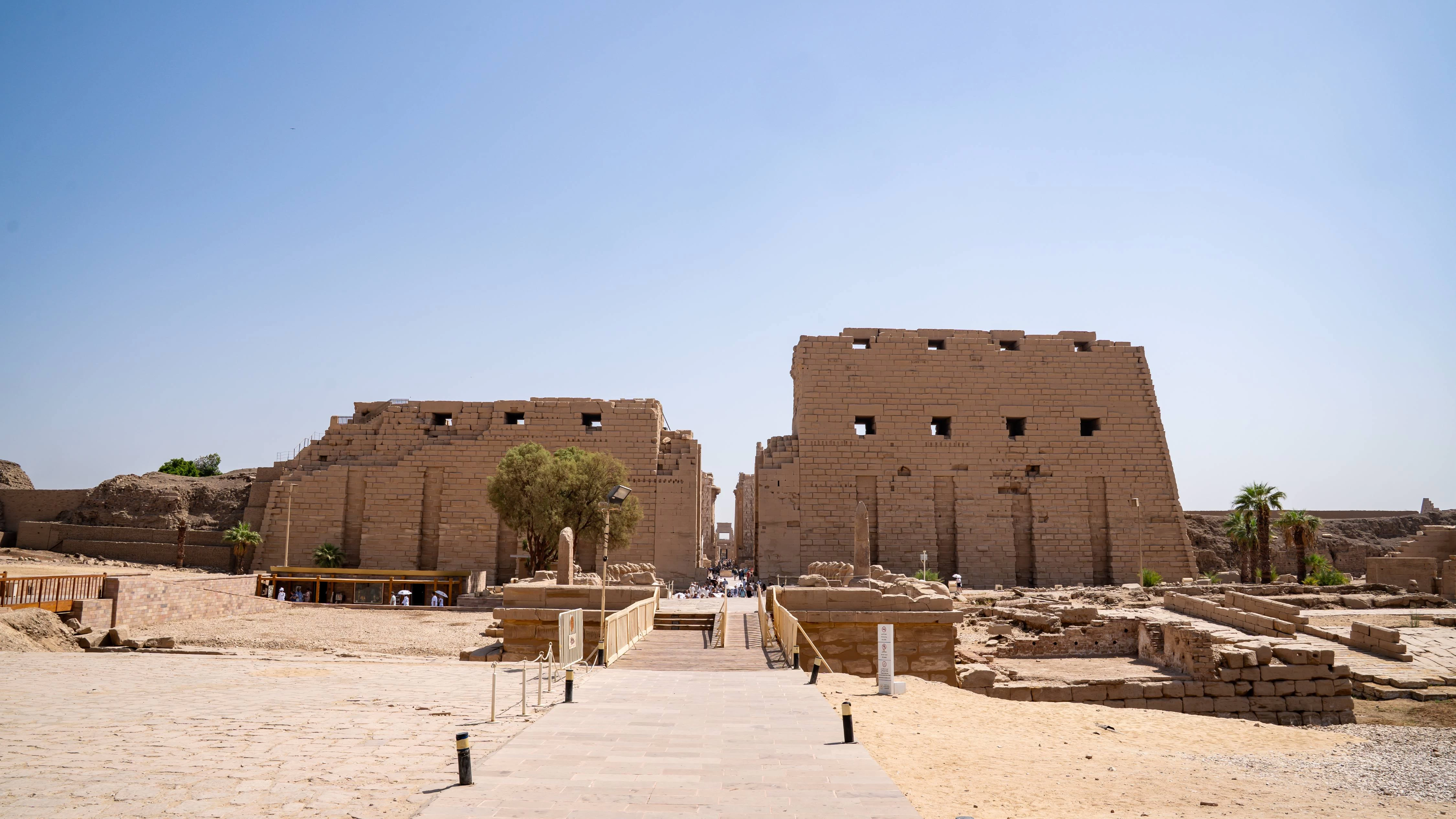
Medinet Habu Temple is located on Luxor's west bank. It was buit by the last great pharaoh who ruled Egypt, Ramesses III.
The axis of the temple is aligned east-west with Luxor Temple, serving to host the annual procession of Amun to the east bank of the Nile. It features a unique architectural style (Syrian style, or Asiatic style) where a higher balcony level was aded to create a private retreat for the king to watch the festival activities.
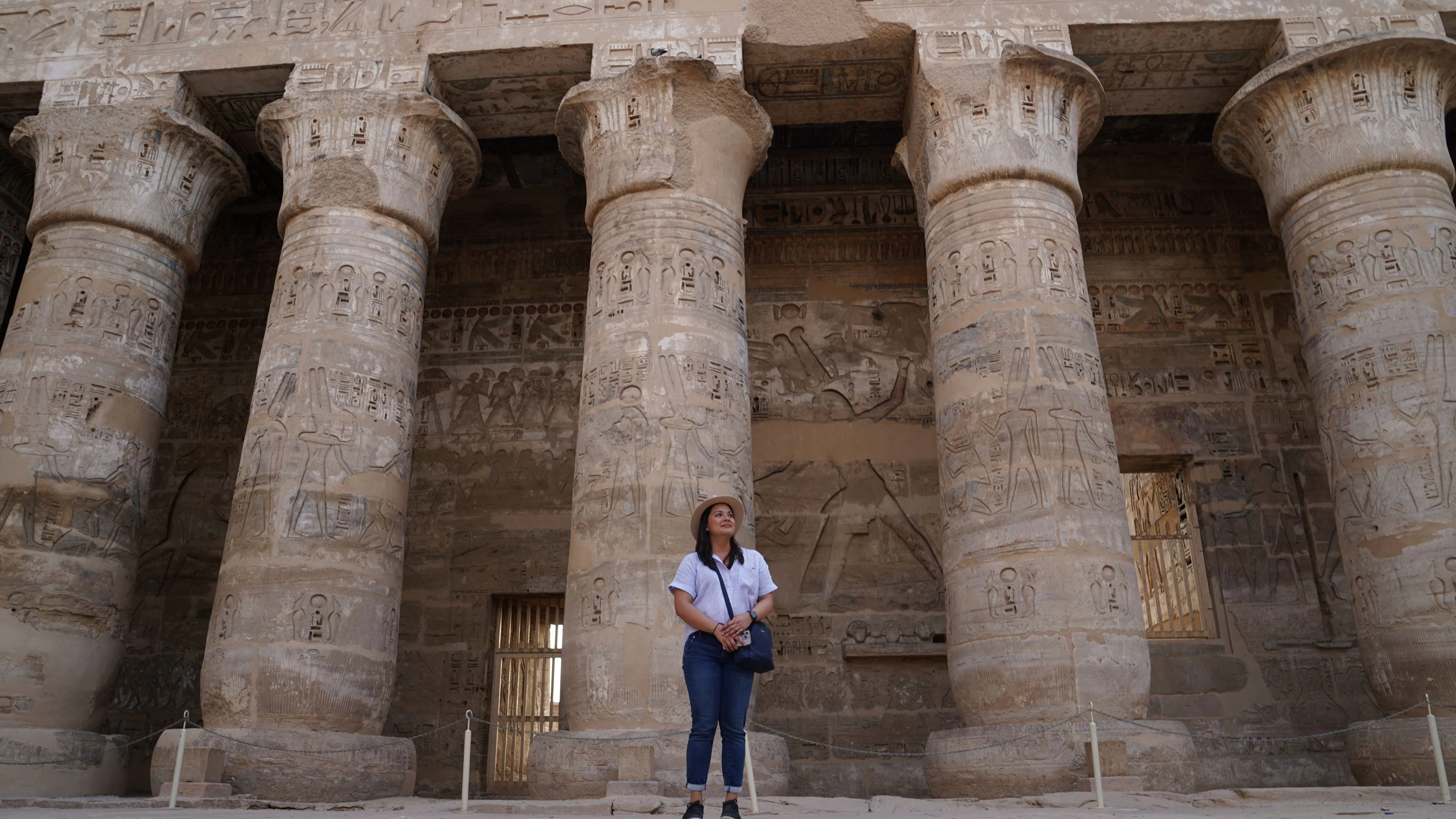
Ramesses III had several inscriptions carved deeply into the temple walls, protecting them from random (or targeted) damage. Cartouches with engravings deep enough to fit a hand in helped reassure the pharaoh that no subsequent rulers would repurpose his cartouches with their own names carved over his.
The temple also contains the remains of a royal palace (including a bathroom and the royal throne hall); this is the only such temple that contains a palace, making it unique among archeological sites.
As with many temples, Ramesses III used the temple's reliefs to show his battle prowess and political standing. The temple shows many of Egypt's neighbors and enemeies, with different facial features indicating the king's triumphs over Libyan, Sea People and Asian enemies. The temple still has colorful artwork, the paint preserved over the centuries by being covered in soot (when the temple was used by Christians fleeing Roman persecution; the smoke from their cooking would cover the ancient painting).
If you have more then a night in Luxor, Medinet Habu is a must-see.
-webp.webp)
-webp.webp)